
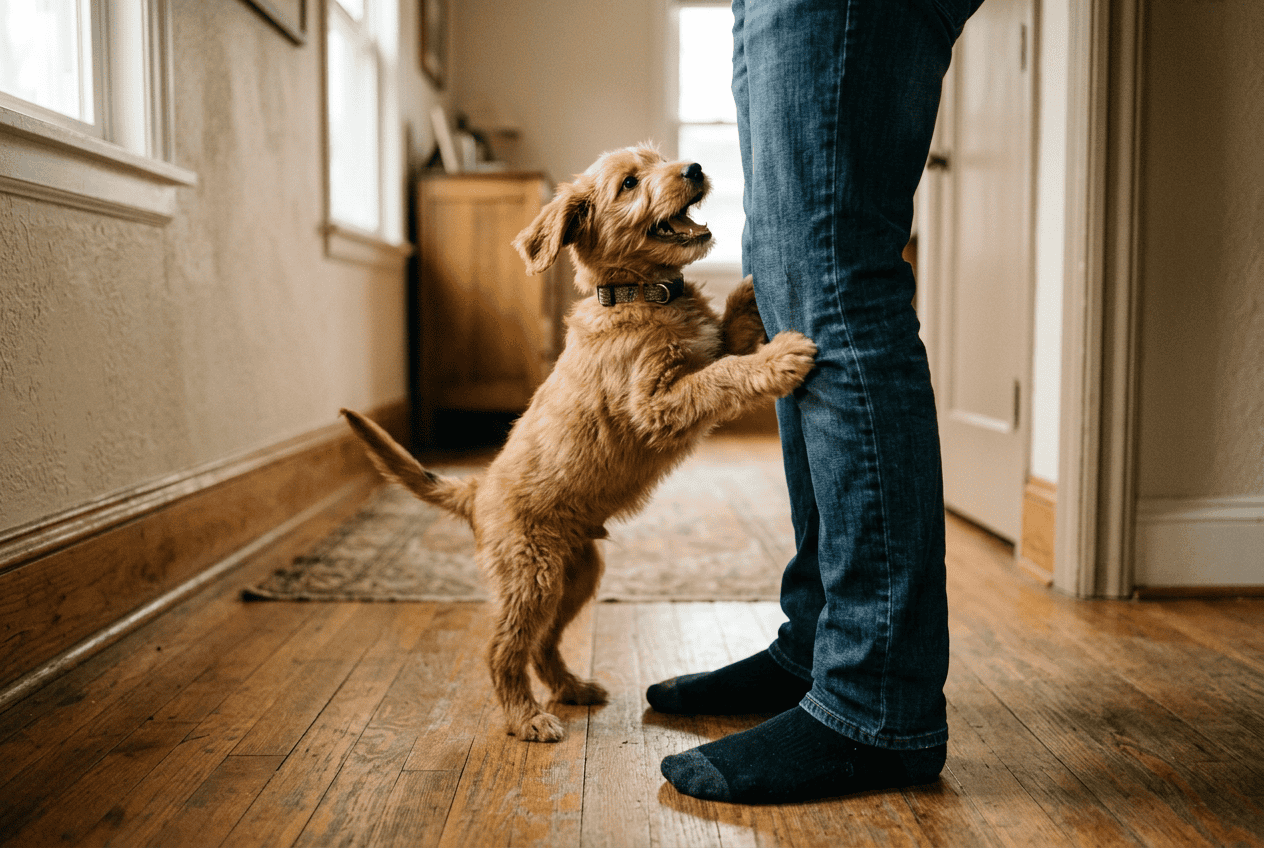
If you have a puppy (or an older dog) who jumps up a lot you might be worried about them knocking people over or upsetting people who aren’t big fans of being leapt all over.
You’ve probably already tried the common advice of turning your back or ignoring your dog when they jump up – and you won’t be the only one who’s tried pushing your dog down or telling them off… but there’s a very good reason these strategies don’t work.
And that’s often because us humans become so fixated on how to stop a behaviour we find problematic – that we miss the easier strategy of thinking about what we’d like the dog to do instead.
In this blog, our dog behaviourist Nathan will explain why dogs jump up and what you can proactively do to teach your dog to keep all four paws calmly on the floor.
Why do dogs jump up?
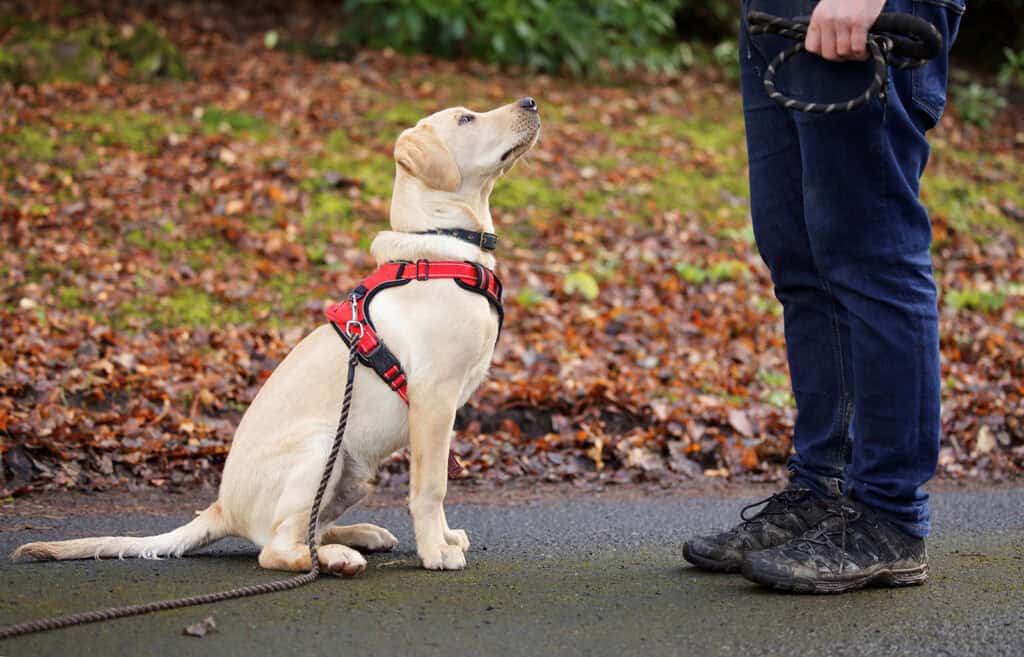
It’s always useful to think about what motivates a dog to do something before we consider how to stop it. And that’s because once we understand the why behind the behaviour, it’s far easier to develop a successful training plan.
Usually dogs jump up for one of the following reasons:
- they want to get access to something that’s above them
- they see food or items in hands or on surfaces up high
- they see a face that they want to greet
- they’ve jumped in your lap when small and been rewarded with fuss or play
- they are in pain or discomfort and need to release adrenaline
What a dog repeats regularly becomes more ingrained – and so if your puppy or dog is regularly rewarded for jumping up, it quickly becomes a habit they may find hard to stop.
But often what is missed is the reward the dog is achieving when they do the behaviour – and this is why common tips like turning your back or ignoring your dog fail.
Because we don’t decide what’s reinforcing for your dog – they do.
So when you shout or tell them off, your dog may be receiving the attention they craved, even if it’s what we might consider negative attention. And when you ignore your dog, they’re not learning what to do instead – which can sometimes lead to the behaviour increasing rather than decreasing as your dog tries harder to achieve their goal.
How to stop a dog jumping up
It might feel like your dog jumps up all the time but it’s useful to start taking note of what contexts the behaviour happens in. For example, maybe your puppy jumps up and bites when they’re frustrated or perhaps your dog jumps up on strangers in the street. Some dogs jump up lots when overexcited or when guests come over.
The situations that precede the jumping up provide us with useful information.
When we know what scenarios your dog is likely to jump on people in, we can make a training plan to teach your dog what to do instead. The more you can reinforce an alternative behaviour, the quicker your dog will learn what you’d like them to do.
Let’s look at some specific examples so you finish reading this article with a clear plan of action.
How to stop a puppy jumping up and biting
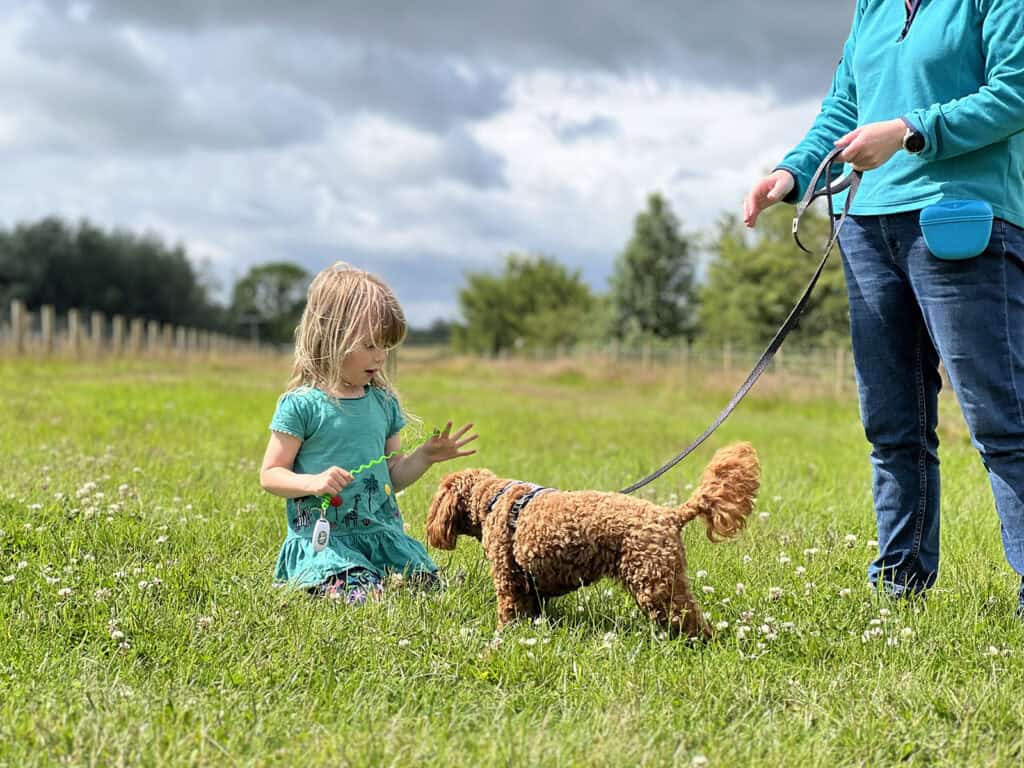
When a puppy is jumping up and biting it can be really unpleasant (and painful). Often they’re jumping up out of frustration or looking for relief if they’re teething and their mouth is sore. They might be jumping up for attention or because they’ve learned it earns them food.
If your puppy is jumping and biting because their mouth is sore, then offering them something appropriate to chew or bite is a good alternative behaviour to encourage. Grab your puppy an age appropriate chew or a soft toy to bite and encourage them to enjoy it with all paws on the floor.
Ideally, you want to predict the behaviour and spot the cues your puppy is feeling mouthy, so you can present them with a solution BEFORE the jumping and biting starts.
If your pup is jumping up for attention then try to ensure they’re getting regular play sessions and human interaction so that need is satisfied without them demanding it in challenging ways!
Don’t beat yourself up if you don’t always manage to identify what your puppy needs before the jumping starts – just notice the contexts when it happens and learn to spot the signs earlier each time.
How to stop a dog jumping up when excited
Regulating emotions is very difficult for puppies because the front part of their brain is not yet developed. This is why when a puppy is excited it’s tricky for them to control their impulses and engage their brain! It might feel like your puppy is being defiant or naughty but in reality, their prefrontal cortex is still maturing – which makes controlling excitement a bit of a challenge for them!
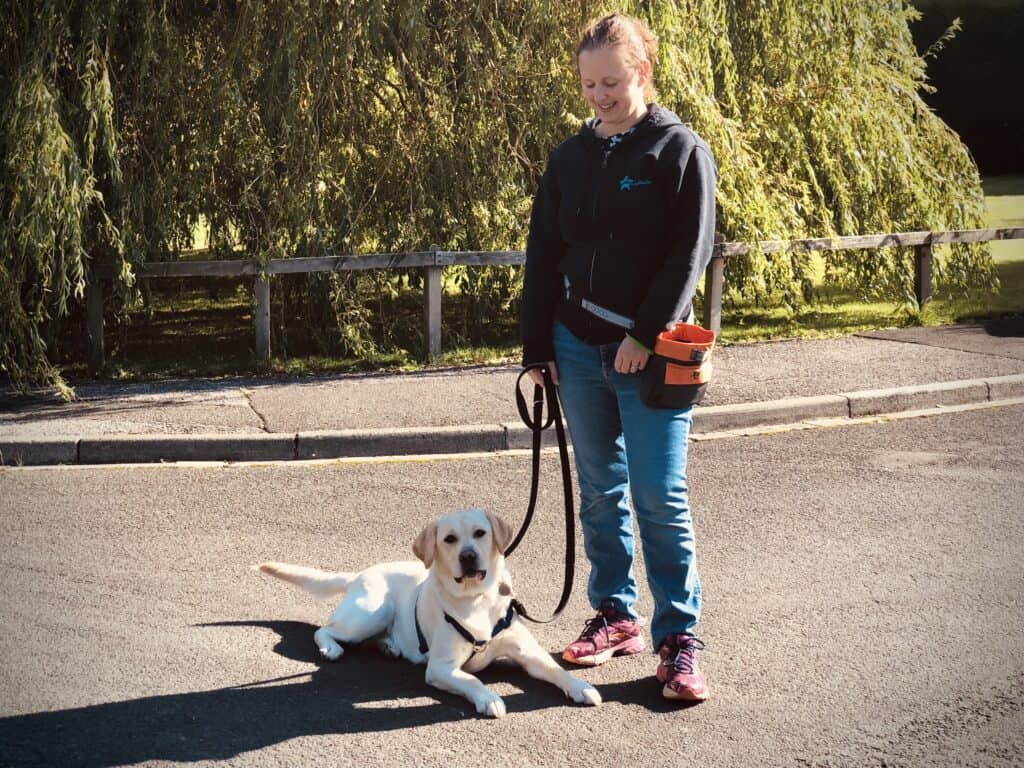
The best way to help an excited puppy or dog resist jumping up is to make it super duper rewarding to keep their paws on the floor.
So while your dog’s attention is fixated on either an exciting person or something up high they’d like to reach, you want to redirect their attention to something lower down.
You could use a tug toy to engage them in play at floor level – this will allow them to release their pent up excitement in an appropriate way. With practice, you can use this sort of play to help your dog learn to alternate between high energy and calming activities which helps them learn to better manage their emotions
If you’d like some help training your puppy, have a look at our puppy classes in Northumberland.
How to stop a dog jumping up on strangers

When a dog jumps up at strangers on walks it can feel embarrassing. You might worry that people will think you don’t have control of your dog or feel concerned that people will judge you.
It’s important to know that when your dog jumps up at strangers it’s not always because of excitement or a desire to greet them – sometimes it’s quite the opposite. Dogs are very good at masking pain or discomfort and so sometimes a dog may be jumping up either to expend adrenaline or as an appeasement effort to ward away touch or interactions.
Whether it’s overexcitement or an attempt to keep people away that triggers your dog to jump up at strangers, you can use distance to help you teach your dog an alternative response.
If you know your dog is likely to jump up when someone approaches, then take a proactive approach. Use a lead when beginning your training as you teach your dog to engage with something at ground level BEFORE a person approaches.
I recommend starting with a 5 foot longline lead and asking someone to assist you with your training. To begin with, you want your assistant to stay out of jumping distance so it’s impossible for your dog to practice the behaviour of jumping up.
Ask your assistant to stay at least 6 feet away and before they approach, engage your dog in either play with a tug toy or search games for treats on the ground. As the person approaches, pay your dog with play or treats for keeping their paws on the floor and stop the training session while your dog’s succeeding.
Over time, you can work up to your assistant coming closer and once your dog is successfully resisting the urge to attempt to jump up, you can progress to training off lead.
If you’d like support with your training, our 1:1 dog training sessions in Northumberland with Nathan might be just what you need.
Do puppies grow out of jumping up?
It depends on the dog. As some dogs grow into a bigger frame, the effort of jumping up actually becomes less reinforcing than keeping their feet on the ground. But for some breeds, like Spaniels, they find it’s intrinsically motivating to do the jumping behaviour so it just continues unless they’re actively taught to do something else!
What one thing will make the biggest difference to my dog’s jumping up?
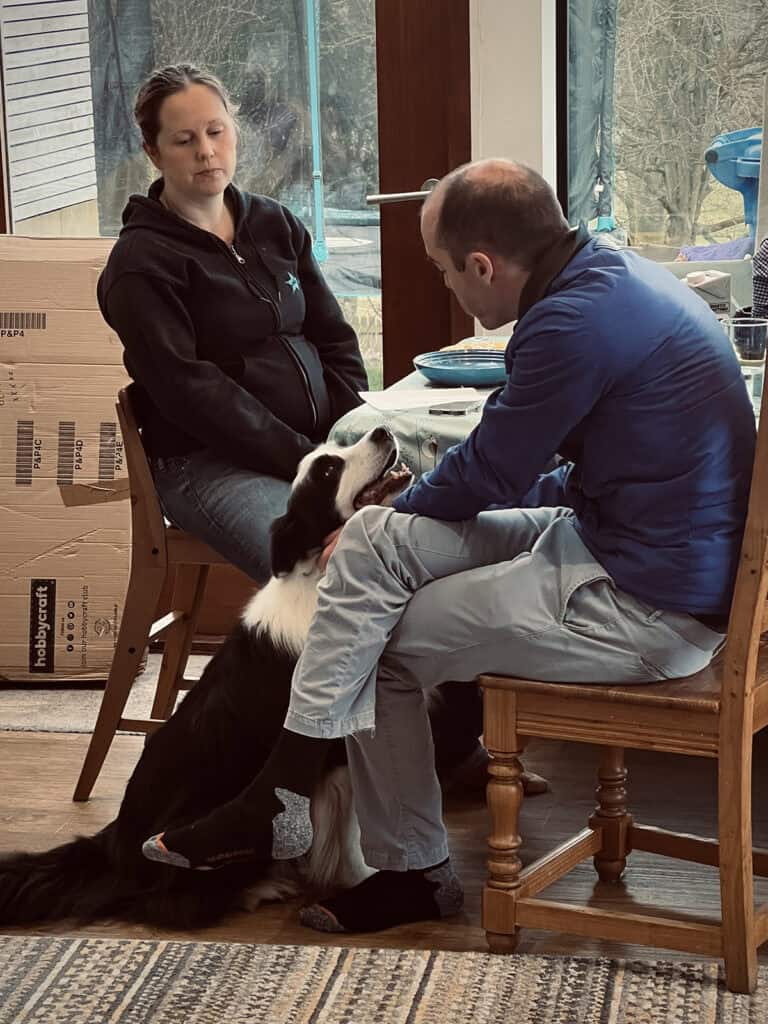
Practice, practice, practice what you’d like your dog to do instead! The most effective way to stop your dog jumping up is to teach and reinforce heavily what you’d like them to do (aka keep their feet on the floor).
So for example, if people approaching sends your dog into a frenzy, find somebody you can ask to practice distanced approaches with and repeat it regularly. You could make it a fun part of their dinner time – so a person approaches and your dog wins a bit of their dinner if they can keep their feet on the ground.
Importantly, while you’re training, put management in place so your dog can’t practice jumping up – because the more they practice it, the more they’ll do it! Use a lead or a baby gate in the home when visitors come over and go at a pace that allows your dog to succeed.
A little note on pain and jumping up
On rare occasions, there are dogs who will jump and bounce and fidget because they’re in discomfort. While that can seem contradictory as you might expect a dog in pain to be still or reluctant to move – it’s a way for their nervous system to release adrenaline.
So you might have a dog who looks very excited when a person approaches but under the surface, they have aches or pains. They need to expend the adrenaline their nervous system is producing, so they end up goofing around or jumping up on people.
They may associate the aches and pains with the approach of the person – or they may predict that someone approaching will touch them and so they start to move more or jump about. The dog may realise that when they jump up a person retreats or moves away, and so jumping up becomes a practical way to keep themselves out of harm’s way.
If you’re curious about whether pain might be playing a part in your dog’s behaviour then get in touch to discuss a dynamic dog assessment. Louisa is a qualified APDT dog trainer and dynamic dog practitioner who can assess your dog’s behaviour and movement to help identify hidden pain.
In conclusion
Each dog has their own reason for jumping up, and a one-size-fits-all approach rarely works. Nathan is particularly skilled at discovering what motivates each dog and guiding them towards calmer, more connected walks and behaviour.
Using reinforcement to encourage your dog to keep all four paws on the floor is a key part of the jigsaw – while also learning when and how to reduce that reinforcement (another part of the jigsaw).
If you’d like support with your training, our 1:1 dog training sessions give you access to a qualified behaviourist and trainer who will guide you every step of the way.